
A Problem Many Patients Don't See Coming
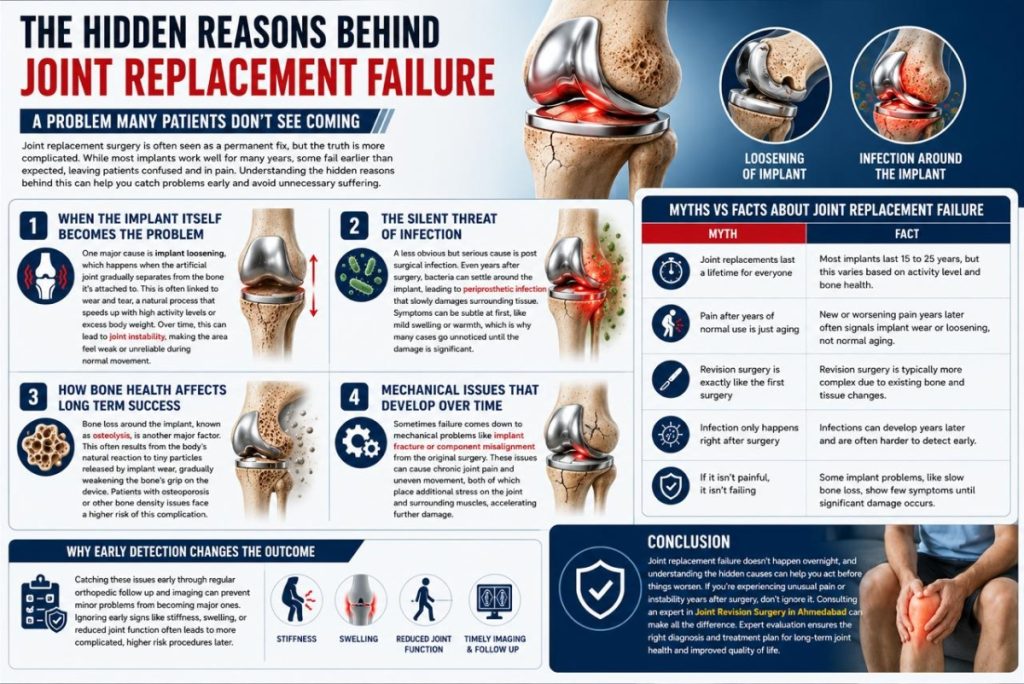
Joint replacement surgery is often seen as a permanent fix, but the truth is more complicated. While most implants work well for many years, some fail earlier than expected, leaving patients confused and in pain. Understanding the hidden reasons behind this can help you catch problems early and avoid unnecessary suffering.
When the Implant Itself Becomes the Problem
One major cause is implant loosening, which happens when the artificial
joint gradually separates from the bone it’s attached to. This is often linked to wear and tear, a natural process that speeds up with high activity levels or excess body weight. Over time, this can lead to joint instability, making the area feel weak or unreliable during normal movement.
The Silent Threat of Infection
A less obvious but serious cause is post surgical infection. Even years after surgery, bacteria can settle around the implant, leading to periprosthetic infection that slowly damages surrounding tissue. Symptoms can be subtle at first, like mild swelling or warmth, which is why many cases go unnoticed until the damage is significant.
How Bone Health Affects Long Term Success
Bone loss around the implant, known as osteolysis, is another major factor. This often results from the body’s natural reaction to tiny particles released by implant wear, gradually weakening the bone’s grip on the device. Patients with osteoporosis or other bone density issues face a higher risk of this complication.
Mechanical Issues That Develop Over Time
Sometimes failure comes down to mechanical problems like implant fracture or component misalignment from the original surgery. These issues can
cause chronic joint pain and uneven movement, both of which place additional stress on the joint and surrounding muscles, accelerating further damage.
Myths vs Facts About Joint Replacement Failure
Myth | Fact |
Joint replacements last a lifetime for everyone | Most implants last 15 to 25 years, but this varies based on activity level and bone health |
Pain after years of normal use is just aging | New or worsening pain years later often signals implant wear or loosening, not normal aging |
Revision surgery is exactly like the first surgery | Revision surgery is typically more complex due to existing bone and tissue changes |
Infection only happens right after surgery | Infections can develop years later and are often harder to detect early |
If it isn’t painful, it isn’t failing | Some implant problems, like slow bone loss, show few symptoms until significant damage occurs |
Why Early Detection Changes the Outcome
Catching these issues early through regular orthopedic follow up and imaging can prevent minor problems from becoming major ones. Ignoring early signs like stiffness, swelling, or reduced joint function often leads to more complicated, higher risk procedures later.
Conclusion
Joint replacement failure doesn’t happen overnight, and understanding the hidden causes can help you act before things worsen. If you’re experiencing unusual pain or instability years after surgery, don’t ignore it. Consulting an expert in Joint Revision Surgery in Ahmedabad can make all the difference. At Saviour Hospital, Dr. Rushay Bhalodia brings deep expertise in diagnosing and treating complex joint failures, helping patients regain stability and confidence in their movement.