
The Question Almost Every Patient Asks First
Before surgery even happens, most patients want to know one thing above everything else: how soon will I be back on my feet? It’s a fair question, since walking again represents real progress and a return to independence. The honest answer depends on several factors, but the timeline is often faster than most people expect.
Walking Sooner Than You Might Think
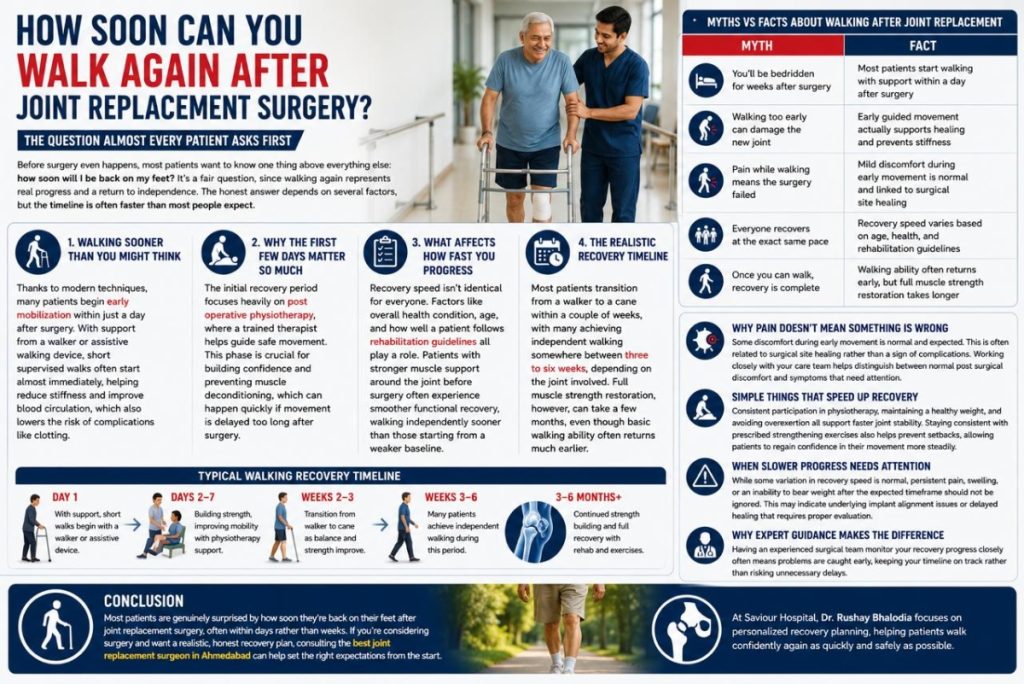
Thanks to modern techniques, many patients begin early mobilization within just a day after surgery. With support from a walker or assistive walking device, short supervised walks often start almost immediately, helping reduce stiffness and improve blood circulation, which also lowers the risk of complications like clotting.
Why the First Few Days Matter So Much
The initial recovery period focuses heavily on post operative physiotherapy, where a trained therapist helps guide safe movement. This phase is crucial for building confidence and preventing muscle deconditioning, which can happen quickly if movement is delayed too long after surgery.
What Affects How Fast You Progress
Recovery speed isn’t identical for everyone. Factors like overall health condition, age, and how well a patient follows rehabilitation guidelines all play a role. Patients with stronger muscle support around the joint before surgery often experience smoother functional recovery, walking independently sooner than those starting from a weaker baseline.
The Realistic Recovery Timeline
Most patients transition from a walker to a cane within a couple of weeks, with many achieving independent walking somewhere between three to six weeks, depending on the joint involved. Full muscle strength restoration, however, can take a few months, even though basic walking ability often returns much earlier.
Myths vs Facts About Walking After Joint Replacement
Myth | Fact |
You’ll be bedridden for weeks after surgery | Most patients start walking with support within a day after surgery |
Walking too early can damage the new joint | Early guided movement actually supports healing and prevents stiffness |
Pain while walking means the surgery failed | Mild discomfort during early movement is normal and linked to surgical site healing |
Everyone recovers at the exact same pace | Recovery speed varies based on age, health, and rehabilitation guidelines |
Once you can walk, recovery is complete | Walking ability often returns early, but full muscle strength restoration takes longer |
Why Pain Doesn't Mean Something Is Wrong
Some discomfort during early movement is normal and expected. This is often related to surgical site healing rather than a sign of complications. Working closely with your care team helps distinguish between normal post surgical discomfort and symptoms that need attention.
Simple Things That Speed Up Recovery
Consistent participation in physiotherapy, maintaining a healthy weight, and avoiding overexertion all support faster joint stability. Staying consistent with prescribed strengthening exercises also helps prevent setbacks, allowing patients to regain confidence in their movement more steadily.
When Slower Progress Needs Attention
While some variation in recovery speed is normal, persistent pain, swelling, or an inability to bear weight after the expected timeframe should not be ignored. This may indicate underlying implant alignment issues or delayed healing that requires proper evaluation.
Why Expert Guidance Makes the Difference
Having an experienced surgical team monitor your recovery progress closely often means problems are caught early, keeping your timeline on track rather than risking unnecessary delays.
Conclusion
Most patients are genuinely surprised by how soon they’re back on their feet after joint replacement surgery, often within days rather than weeks. If you’re considering surgery and want a realistic, honest recovery plan, consulting the best joint replacement surgeon in Ahmedabad can help set the right expectations from the start. At Saviour Hospital, Dr. Rushay Bhalodia focuses on personalized recovery planning, helping patients walk confidently again as quickly and safely as possible.