
Introduction
Knee arthritis and other forms of joint damage can gradually make walking, climbing stairs, exercising, and performing everyday activities more difficult. When non-surgical treatments no longer provide enough relief, knee replacement may be considered. Robotic technology is now used in some knee replacement procedures to assist surgeons with planning and precise execution. Understanding how this technology works can help patients have a more informed discussion about their treatment options.
What Is Robotic Knee Replacement?
Robotic knee replacement is a procedure in which a robotic-assisted system supports the surgeon during knee replacement surgery. The technology can help create a detailed surgical plan based on the patient’s individual knee anatomy and provide guidance during key steps of the procedure.
Importantly, the robot does not independently perform the operation. The orthopedic surgeon remains responsible for evaluating the patient, making surgical decisions, and controlling the procedure.
How Does Robotic Technology Assist During Surgery?
Before surgery, imaging and computer-assisted planning may be used to understand the shape, alignment, and condition of the knee. This information can help the surgeon plan the position of the implant and determine the areas of bone that need to be prepared.
During surgery, the system can provide guidance based on the preoperative plan. This may help the surgeon make controlled bone preparations and position the components according to the planned alignment.
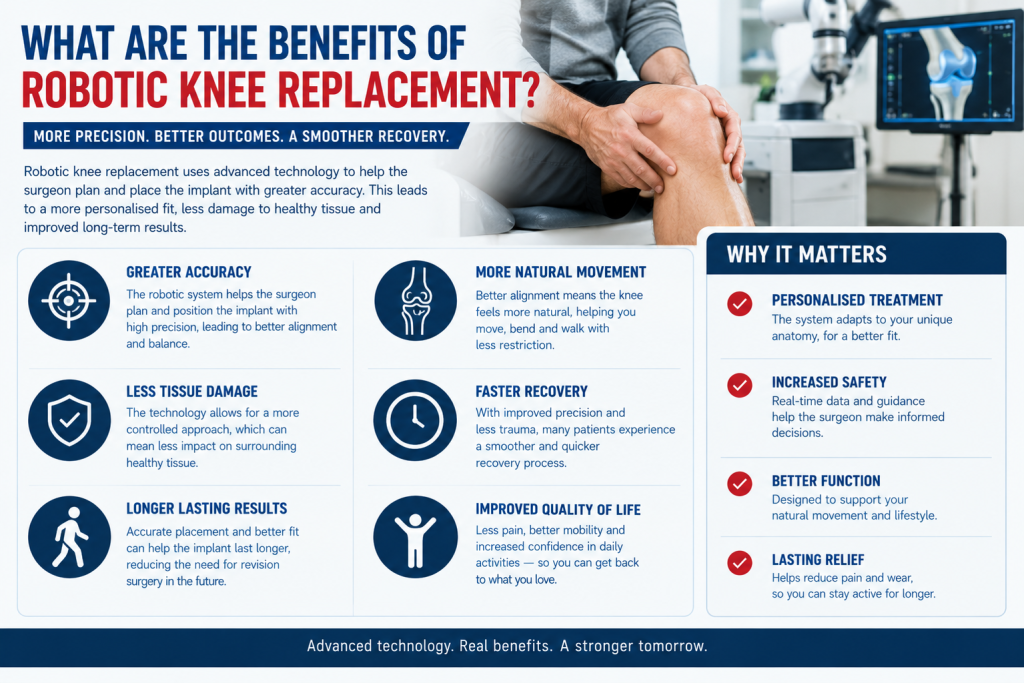
What Are the Potential Benefits?
Greater Precision in Surgical Planning
One benefit of robotic assistance is detailed planning based on the patient’s individual anatomy. Instead of relying solely on standard measurements, the surgeon can use computer-generated information to plan important aspects of the procedure.
More Controlled Implant Positioning
Accurate positioning of knee replacement components is an important part of the procedure. Robotic assistance can provide the surgeon with additional guidance while preparing the joint and positioning the implant.
Individualized Surgical Approach
Every knee has differences in anatomy, alignment, and the extent of joint damage. Robotic systems can help the surgeon develop a surgical plan that takes these individual characteristics into account.
Support for Knee Alignment and Balance
Proper alignment and balance are important for knee function after surgery. Robotic technology can provide information that helps the surgeon assess the planned alignment and make adjustments when appropriate.
Technology-Assisted Surgical Planning
Computer-based planning allows the surgical team to review the procedure before entering the operating room. This can help the surgeon anticipate anatomical considerations and prepare for the operation more effectively.
Is Robotic Knee Replacement Suitable for Everyone?
Robotic assistance is not automatically necessary for every person requiring knee replacement. Suitability depends on factors such as the severity of arthritis, the condition of the knee, overall health, previous surgeries, anatomy, and the surgeon’s assessment.
A consultation with an orthopedic specialist can help determine whether robotic assistance offers a meaningful benefit in a particular case.
What Should You Look for in a Knee Replacement Hospital?
When choosing a knee replacement hospital, patients should consider more than the availability of robotic technology. The experience of the orthopedic surgical team, preoperative assessment, operating-room protocols, anesthesia support, physiotherapy, infection-control measures, and postoperative follow-up are also important.
Patients should ask their surgeon how robotic assistance would be used in their specific procedure and what benefits can reasonably be expected.
What Is Recovery Like After Robotic Knee Replacement?
Recovery varies from person to person. Early movement and physiotherapy are generally important parts of rehabilitation after knee replacement. Pain management, exercises to restore strength and mobility, and regular follow-up can support the recovery process.
Robotic assistance may help with surgical planning and execution, but recovery also depends on factors such as overall health, muscle strength, rehabilitation participation, and the condition of the knee before surgery.
Making an Informed Treatment Decision
Robotic technology is designed to assist surgeons with planning, precision, and implant positioning during selected knee replacement procedures. However, it is a tool rather than a replacement for surgical judgment. Discussing your symptoms, treatment history, expectations, and available options with an orthopedic specialist can help determine whether robotic knee replacement is appropriate for you.