
Introduction
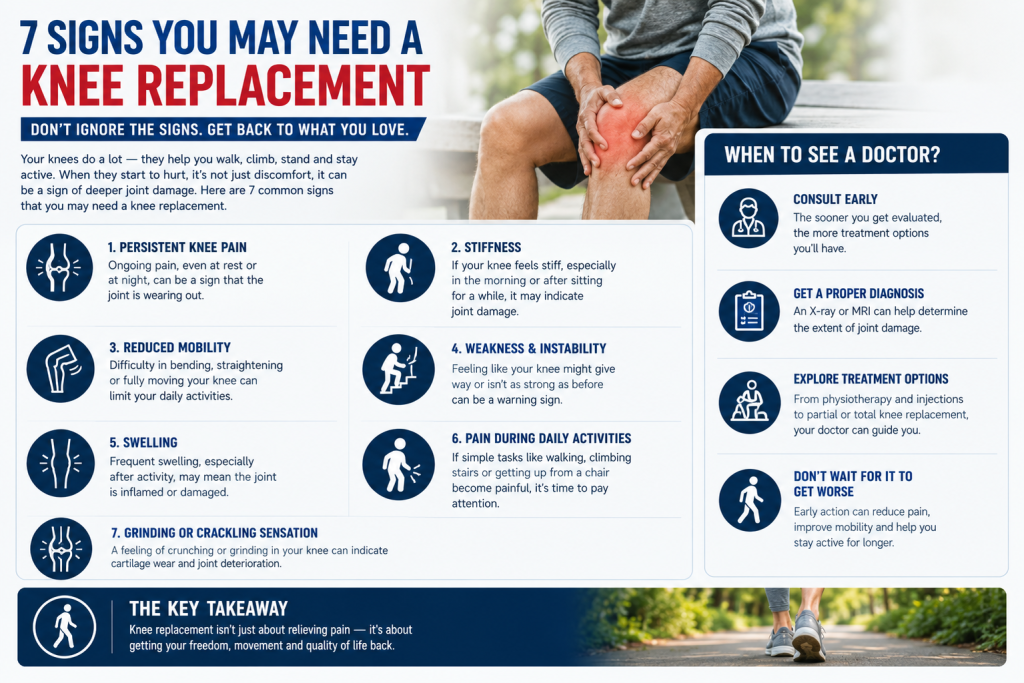
Knee pain can start as a minor inconvenience but may gradually interfere with walking, climbing stairs, sleeping, working, and other everyday activities. While not every knee problem requires surgery, persistent symptoms caused by advanced arthritis or joint damage may eventually require surgical treatment. Knowing the warning signs can help you understand when it may be appropriate to discuss knee replacement with an orthopedic specialist.
When Knee Pain Starts Affecting Daily Activities
Occasional knee discomfort may improve with rest, exercise, physiotherapy, medication, or other non-surgical treatments. However, when pain and stiffness continue despite these measures, an evaluation can help determine whether the joint has developed significant damage.
Here are seven signs that may indicate it is time to discuss further treatment options.
1. Knee Pain Continues Despite Treatment
If pain continues after appropriate non-surgical treatment, it may indicate that the underlying joint damage has progressed. Medicines, physiotherapy, activity modification, weight management, or injections can help many people, but their effectiveness varies. Persistent pain despite these approaches deserves medical assessment.
2. Walking or Standing Becomes Difficult
When knee pain makes it difficult to walk even short distances or stand for normal periods, daily independence can be affected. Some people may begin avoiding outings, household activities, or exercise because they are worried about worsening pain. Significant limitations in mobility are an important factor when considering surgery.
3. Stairs and Routine Movements Become Challenging
Difficulty climbing stairs, getting out of a chair, bending the knee, or getting in and out of a vehicle can indicate worsening joint problems. If movements that were previously routine have become consistently painful or difficult, an orthopedic evaluation can help identify the cause.
4. Knee Stiffness Limits Movement
Advanced arthritis can cause stiffness and reduce the knee’s range of motion. You may find it increasingly difficult to fully bend or straighten the leg. Morning stiffness or stiffness after sitting for a long time can also interfere with normal movement and physical activity.
5. Knee Pain Disturbs Your Sleep
Knee pain that regularly occurs at night or makes it difficult to find a comfortable sleeping position can affect both rest and daytime functioning. Occasional nighttime discomfort does not automatically mean surgery is necessary, but persistent pain that disrupts sleep should be discussed with a doctor.
6. Your Knee Feels Unstable or Its Alignment Has Changed
A knee that repeatedly feels as though it may give way can make walking uncomfortable and increase the risk of falls. Some people may also notice changes in leg alignment, such as a bow-legged or knock-kneed appearance. These changes can occur with advanced joint degeneration.
7. Knee Arthritis Is Affecting Your Quality of Life
One of the most important considerations is how much the knee problem affects your overall life. If chronic pain prevents you from exercising, working comfortably, enjoying hobbies, or performing everyday activities, it may be time to discuss surgical and non-surgical options with a specialist.
How Is the Need for Knee Replacement Determined?
The decision is not based on an X-ray alone. An orthopedic specialist may consider your symptoms, medical history, physical examination, range of motion, knee stability, activity level, and imaging findings. Your response to previous treatments is also important.
When joint damage is extensive and symptoms significantly affect daily life, total knee replacement may be considered. This procedure replaces the damaged surfaces of the knee joint with artificial components.
Is Partial Knee Replacement an Option?
Not everyone with knee arthritis needs the entire joint replaced. If arthritis is limited to one specific compartment and the remaining parts of the knee are healthy, partial knee replacement may be an option for selected patients. The appropriate procedure depends on the location and extent of joint damage, along with other individual factors.
When Should You See an Orthopedic Specialist?
Persistent knee pain, worsening stiffness, reduced mobility, instability, or difficulty performing everyday activities are good reasons to seek an evaluation. Discussing your symptoms early does not necessarily mean you will need surgery. A specialist can assess your condition and explain whether conservative treatment, injections, knee replacement, or another approach may be appropriate.
The goal of treatment is to reduce pain, improve mobility, and help you return to daily activities as comfortably and safely as possible.