
A Shift in How Joint Surgery Is Performed
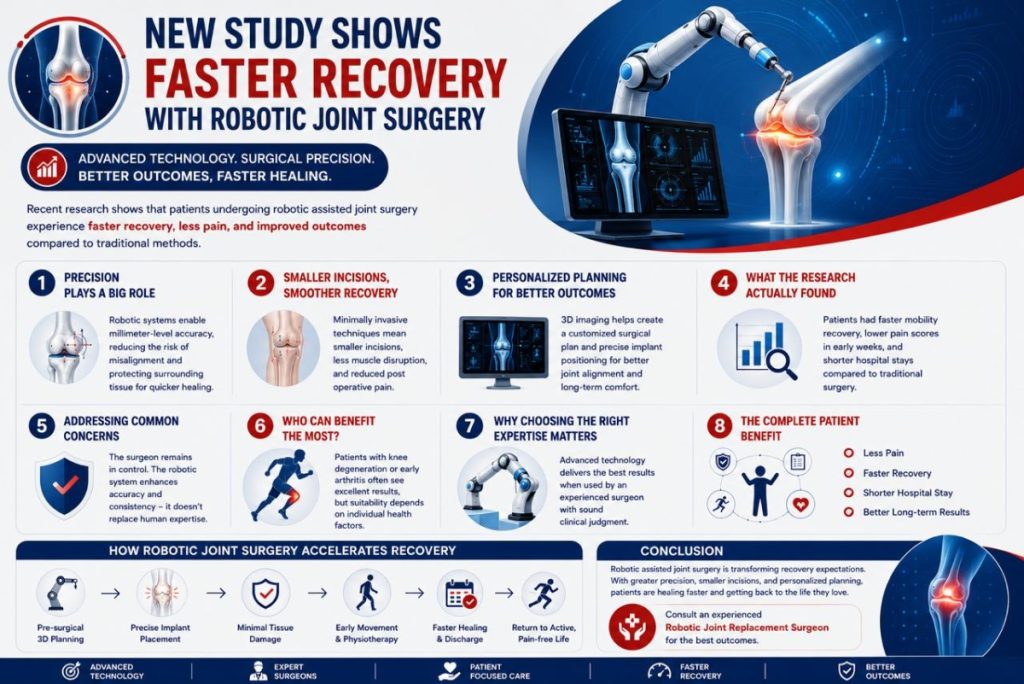
Joint replacement surgery has come a long way, and recent findings are highlighting just how much robotic assistance is changing patient outcomes. A growing body of research now shows that patients undergoing robotic assisted surgery often experience noticeably faster healing compared to those who undergo traditional procedures, raising real questions about why the difference is so significant.
Why Precision Plays Such a Big Role
One of the biggest advantages lies in surgical precision. Robotic systems allow surgeons to plan and execute movements with millimeter accuracy, reducing the chances of misalignment that often leads to longer recovery times. This level of accuracy also helps protect surrounding tissue, minimizing soft tissue damage that typically slows down healing.
Smaller Incisions, Smoother Recovery
Robotic procedures are frequently associated with minimally invasive technique, meaning smaller incisions and less disruption to muscles around the joint. This directly contributes to reduced post operative pain, allowing patients to begin movement and physiotherapy much sooner than with conventional surgery.
How Personalized Planning Improves Outcomes
Before surgery even begins, robotic systems use 3D imaging technology to create a detailed map of the patient’s joint structure. This allows for customized implant positioning, tailored specifically to each patient’s anatomy rather than relying on standard measurements. The result is often better joint alignment, which plays a major role in long term comfort and function.
What the Research Actually Found
Recent studies tracking patient recovery timelines found that those undergoing robotic procedures regained mobility faster and reported lower pain scores during the first few weeks after surgery. Researchers also noted a reduction in hospital stay duration, with many patients discharged earlier than expected, a meaningful benefit for both comfort and cost.
Addressing Common Concerns About the Technology
Despite the promising results, some patients remain hesitant, often due to misconceptions about robotic involvement in surgery. It’s important to understand that the surgeon remains fully in control throughout the procedure, the robotic system simply enhances surgical accuracy and consistency rather than operating independently. This combination of human expertise and technology is what drives improved functional recovery.
Who Can Benefit Most From This Approach
Patients dealing with knee joint degeneration or early stage arthritis often see strong results, especially when early intervention is combined with robotic precision. However, suitability still depends on individual health factors, making proper evaluation essential before deciding on this approach.
Why Choosing the Right Expertise Matters
While the technology itself is impressive, outcomes still depend heavily on the surgeon’s experience in using it effectively. Skilled application of robotic systems, combined with sound clinical judgment, is what truly determines successful long term joint function.
Conclusion
The data is increasingly clear that robotic assisted procedures are reshaping recovery expectations for joint surgery patients. If you’re considering this option, working with an experienced Robotic Joint Replacement Surgeon in Ahmedabad can make all the difference in your results. At Saviour Hospital, Dr. Rushay Bhalodia combines advanced robotic technology with years of surgical expertise, helping patients recover faster and return to an active, pain free life.